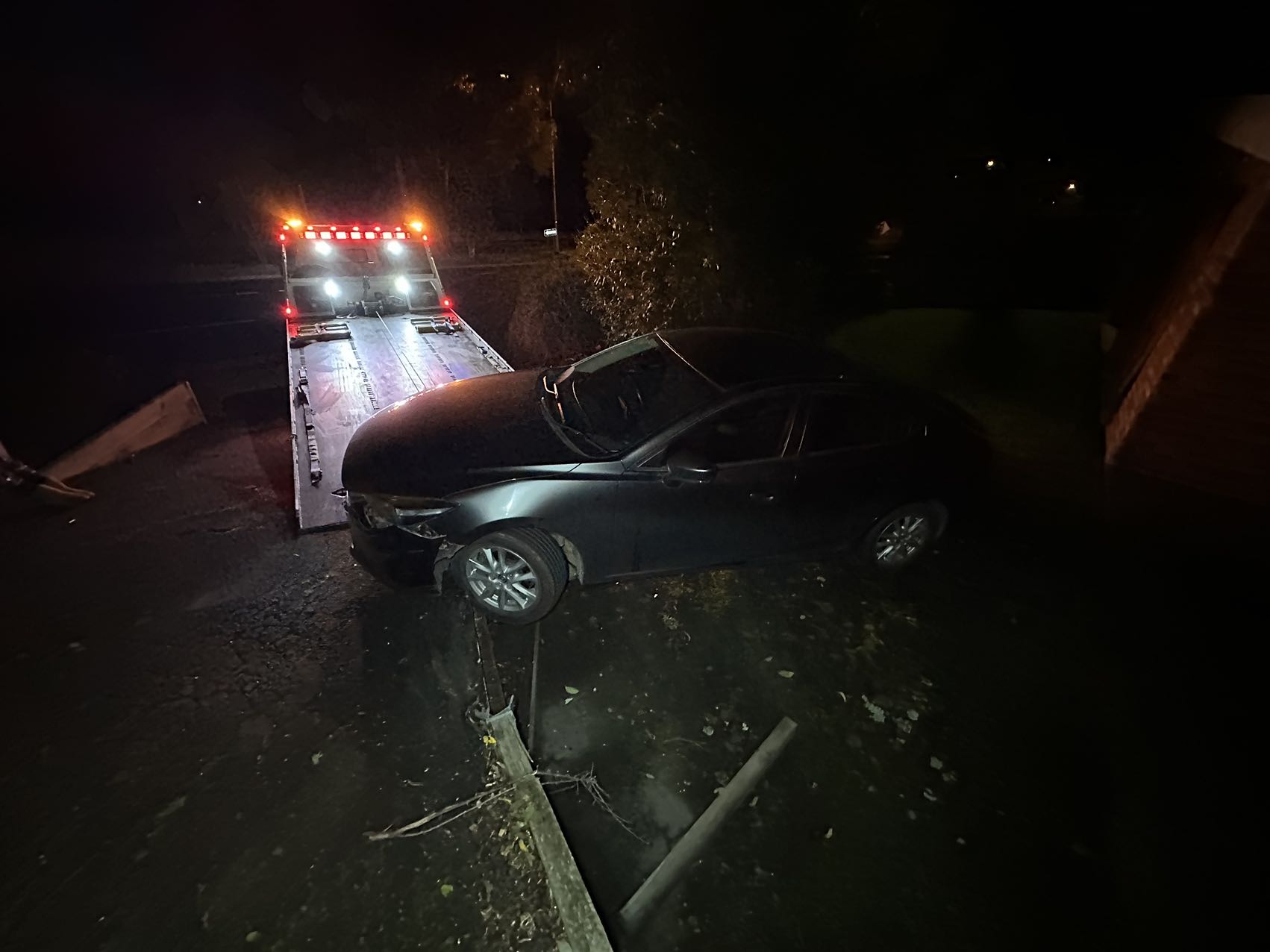
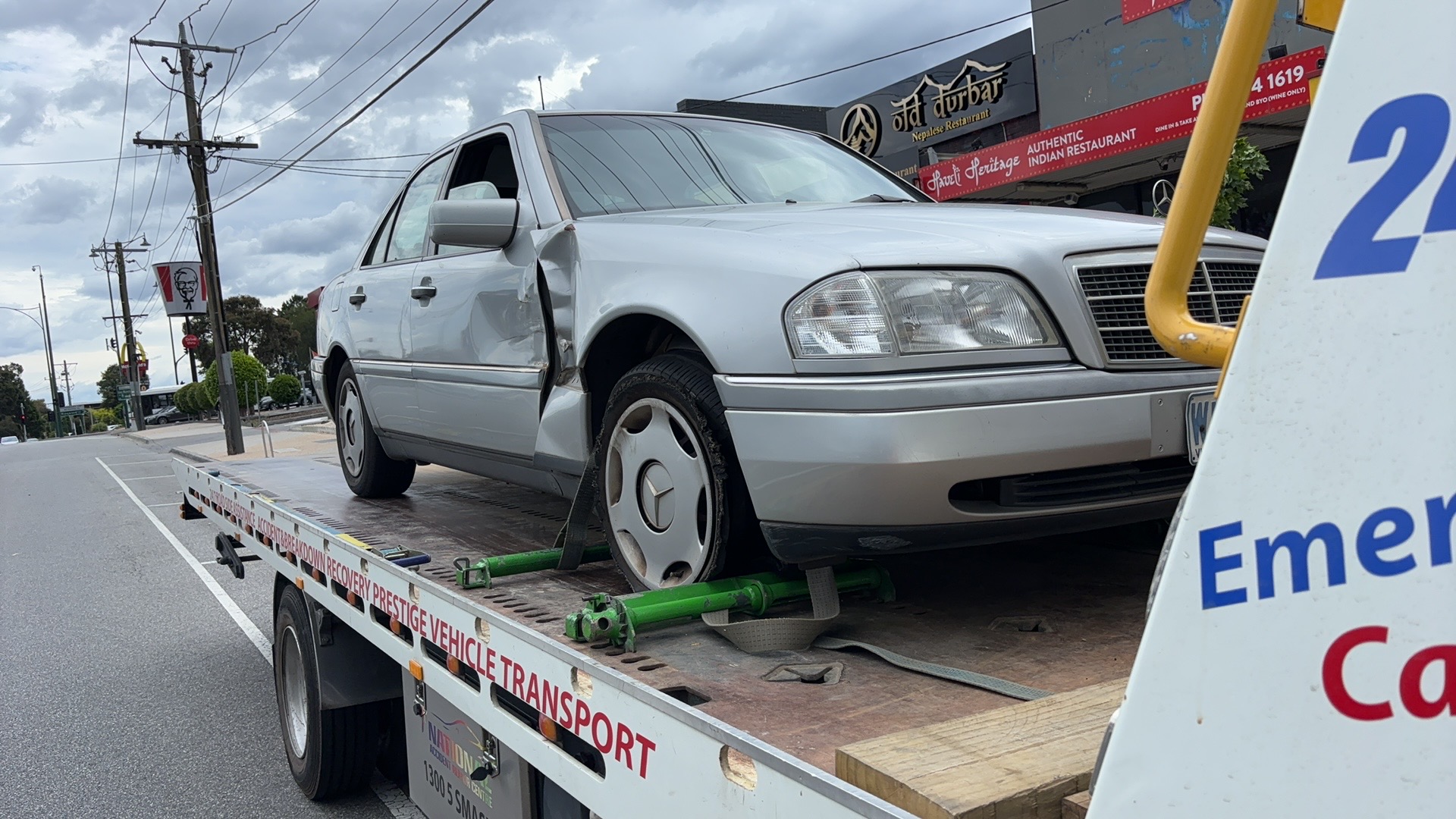
A large pothole can turn an ordinary freeway trip into an expensive problem in seconds. That became very clear on the Princes Freeway near Bunyip in August 2026, when up to 30 vehicles were reportedly forced off the road after hitting large potholes following heavy rain.
According to ABC News, drivers reported damaged tyres and rims along the freeway, while one Warragul motorist who struck the pothole at around 6:20am waited for hours for roadside assistance and a tow truck. About 15mm of rain had been recorded around nearby Warragul, making water-filled potholes particularly difficult to see.
For Melbourne drivers, the incident highlights a practical question: after hitting a pothole, should you keep driving, change the tyre yourself, or arrange car towing melbourne services?
The answer depends on more than whether the tyre still has air.

What Damage Can a Pothole Actually Cause?
Most drivers immediately check the tyre after a hard impact. That makes sense, but tyre damage is only one possibility.
A deep pothole can affect several parts of the vehicle at once:
- tyre sidewall, tread or internal structure
- alloy wheel or steel rim
- wheel alignment
- suspension components
- steering
- wheel bearings
- underbody panels
- exhaust components
- oil pan or other low-mounted components
The damage is not always obvious on the roadside.
A tyre, for example, may still be inflated after the impact but develop a sidewall bulge or internal belt damage. A bent wheel can also continue turning while causing vibration that becomes more noticeable at higher speeds.
This is particularly important after a high-speed freeway impact. Something that feels manageable at 20km/h may become unsafe at 100km/h.
When Should You Stop Driving After Hitting a Pothole?
If the vehicle still moves, it can be tempting to keep driving to the nearest tyre shop. Sometimes that is reasonable. Sometimes it turns relatively small damage into a much larger repair bill.
Call for towing if the tyre is flat or badly damaged
A completely flat tyre should not be driven on unless you are moving an extremely short distance to get out of immediate danger.
Driving on it can destroy the tyre, damage the rim and affect other wheel components.
If you do not have a usable spare tyre, or it is unsafe to replace the wheel beside a busy freeway, calling emergency towing is usually the safer option.
Do not continue if the steering has changed
After a heavy pothole impact, pay attention to how the steering feels.
Stop driving if:
- the steering wheel is suddenly off-centre
- the car pulls strongly left or right
- steering feels unusually loose
- the wheel shakes or vibrates
- you hear knocking from the suspension
These symptoms may indicate wheel, steering or suspension damage.
Stop if you see fluid leaking underneath the vehicle
Low vehicles can strike the edge of a deep pothole hard enough to damage components underneath the car.
If you notice oil, coolant or another fluid leaking after the impact, continuing to drive can cause considerably more expensive engine or mechanical damage.
In this situation, arranging car towing melbourne rather than attempting to reach a workshop under your own power is generally the safer choice.
What Should You Do If Your Car Is Disabled on a Freeway?
Your first priority is not inspecting the wheel. It is getting yourself and the vehicle into the safest possible position.
Transport Victoria says drivers who break down or crash should move to a safe location such as an emergency stopping lane where possible, switch on hazard lights, and contact emergency services or roadside assistance when required. If a vehicle cannot be moved and is blocking traffic on a major Melbourne road, drivers can also contact the Traffic Management Centre on 13 11 70.
You can read the official Transport Victoria freeway driving guidance for current Victorian freeway rules.
Do not put yourself at risk trying to inspect or replace a wheel beside fast-moving traffic. The safest option may be to remain in a protected location and organise professional vehicle recovery.
Roadside Assistance or Tow Truck: Which One Do You Need?
Not every pothole impact requires towing.
If the only problem is a straightforward flat tyre and you have a serviceable spare, roadside assistance may be able to replace it.
Towing becomes more appropriate when the vehicle cannot safely continue.
| Vehicle condition | Likely next step |
|---|---|
| Simple flat tyre with usable spare | Roadside tyre change may be enough |
| Two damaged tyres | Tow the vehicle |
| Cracked or badly bent rim | Tow the vehicle |
| Strong vibration after impact | Inspection and towing recommended |
| Steering or suspension feels different | Do not continue at freeway speed |
| Fluid leaking underneath | Stop and arrange towing |
| Vehicle will not move safely | Tow directly to a workshop |
This distinction matters whether you require towing Clayton, Box Hill Towing or assistance elsewhere around Melbourne. The goal is not simply to move the car. It is to avoid making existing damage worse.
Take Photos Before the Vehicle Leaves the Scene
Once everyone is safe, collect evidence if circumstances allow.
Photograph:
- the damaged tyre and wheel
- visible suspension or body damage
- the road location
- the pothole, if it can be photographed safely
- nearby signs or landmarks
- the vehicle’s dashboard warning lights
Also note the date, approximate time and exact location.
These records may be useful when speaking with your insurer or documenting a road-damage incident. Keep receipts for towing, tyre replacement, wheel repairs and mechanical inspections as well.
Do not walk into traffic or stand beside an active freeway lane simply to photograph the pothole.
Victoria’s Pothole Problem Is Getting More Attention
The Bunyip incident was not isolated.
The following day, ABC reported another group of vehicles suffering tyre damage on the Calder Freeway near Gisborne and Sunbury. One mechanic cited in the report described an Audi wheel costing about $4,000 before the replacement tyre was even added.
Later in August, the Victorian Government announced plans to increase its pothole repair target from 250,000 to 500,000 potholes, with an additional $352 million allocated to the program. The government said work would target major routes including the Princes Highway, Western Highway, Calder Highway and Geelong Ring Road.
For drivers, however, road repairs do not remove the immediate risk when damage has already happened.

Don’t Turn a Damaged Wheel Into a Bigger Repair
The biggest mistake after a pothole impact is assuming that because the car still moves, it is safe to drive.
A damaged $300 tyre is one problem. Driving until the rim, suspension or steering is damaged can turn it into a much larger repair.
If something feels wrong after a heavy impact, reduce speed, move somewhere safe and have the vehicle assessed rather than trying to make it home.
Maningham Towing provides towing and vehicle recovery across Melbourne. If your car has suffered a blown tyre, damaged wheel, suspension problem or another issue that makes it unsafe to drive, contact 247 Car Towing for prompt assistance and get the vehicle transported safely to your preferred repairer.