Melbourne weather can change quickly. A clear morning can turn into heavy rain by the afternoon, and roads that look manageable can become slippery, flooded, or unsafe within minutes. For drivers, wet weather is not just an inconvenience. It changes braking distance, tyre grip, visibility, steering control, and the way a disabled vehicle should be handled.
If your car breaks down during heavy rain, stalls near floodwater, or is involved in a collision on a wet road, the safest decision is usually to stop, move away from traffic if possible, and call a professional towing team. A reliable car towing Melbourne service can help remove the vehicle safely without putting you, your passengers, or other road users at further risk.
This guide explains what drivers should know about towing in Melbourne rain and flood conditions, how to make safer decisions before calling a tow truck, and why flooded roads should never be treated as a simple driving challenge.
Why Rain and Flood Conditions Make Towing More Dangerous
Rain changes road conditions in several ways. Wet roads reduce traction, which means tyres have less grip when braking, turning, or accelerating. The Transport Accident Commission Victoria warns that wet conditions increase stopping distance and make vehicle control more difficult, especially for cars without Electronic Stability Control or ABS.
In towing situations, this risk becomes even higher. A broken-down car may be sitting in a low-visibility area, near standing water, beside fast-moving traffic, or on a shoulder that has become soft from rain. The tow truck operator also needs enough safe space to load or recover the vehicle without creating another hazard.
Floodwater Is Not Just Deep Water
Floodwater can hide potholes, broken road surfaces, debris, open drains, submerged kerbs, and fast-moving currents. Emergency Victoria’s official advice is simple: never drive on flooded roads. The safest action is to avoid flooded areas and leave early for higher ground when flooding is possible.
VICSES also warns that as little as 15 cm of water can be enough for a small vehicle to start floating, reducing driver control and increasing danger to occupants.
That number surprises many drivers because 15 cm can look shallow from inside a car. But once water reaches key vehicle components or begins lifting the tyres, steering and braking can become unreliable very quickly.
When You Should Call a Tow Truck in Melbourne Rain
A car does not need to be fully underwater to need towing. In many wet-weather situations, continuing to drive can cause more damage than stopping.
You should consider calling a tow truck Melbourne service if your vehicle stalls after driving through water, warning lights appear after heavy rain, the engine misfires, the brakes feel weak, the car has been hit on a slippery road, or you are stuck somewhere unsafe.
Common Rain-Related Towing Scenarios
| Situation | Main risk | Safer action |
|---|---|---|
| Car stalls after crossing the water | Engine, electrical, or transmission damage | Do not restart repeatedly. Call a tow truck |
| Vehicle stuck near flooded road | Water may rise or hide road damage | Stay out of floodwater and call for help |
| Accident during heavy rain | Low visibility and secondary collision risk | Move to safety and call an accident towing service |
| Flat tyre on wet freeway shoulder | Passing traffic and poor grip | Stay behind a barrier if safe and request towing help |
| Car aquaplanes and hits kerb | Suspension, steering, or wheel damage | Avoid driving further until checked |
| Brakes feel weak after water exposure | Reduced braking performance | Pull over safely and seek professional help |
This table is useful because wet weather towing is not only about breakdown recovery. It also involves risk control. A vehicle that seems drivable may have hidden damage after water exposure or a wet road impact.
What to Do If Your Car Breaks Down in Heavy Rain
A wet weather breakdown can feel stressful, especially if visibility is poor or other drivers are moving quickly around you. The goal is to protect people first and the car second.
Move Only If It Is Safe
If the car can still move and the road ahead is not flooded, steer carefully to the left shoulder, a side street, a service station, or another safe area. Turn on hazard lights. At night or in heavy rain, headlights can help other drivers see your vehicle earlier.
Do not stop in flowing water, under trees in strong wind, or on a bend where other drivers have limited time to react.
Stay Away From Traffic
If you are on a freeway or major road and it is safe to exit the vehicle, move passengers behind a barrier or away from traffic. Do not stand between your car and approaching vehicles. If the location is unsafe or someone is injured, call 000 first.
Do Not Keep Restarting a Flood-Affected Car
If your vehicle has stalled after driving through water, repeated restarting can make things worse. Water entering the engine can cause serious mechanical damage. Electrical systems, sensors, intake components, and exhaust parts may also be affected.
In this situation, a professional car towing Melbourne operator is often the safer choice because the car can be moved without forcing the engine to run.
Why Floodwater Can Damage a Vehicle So Quickly
Modern cars are full of electrical systems, sensors, control modules, and low-mounted components. Even shallow water can reach areas that are not designed to be submerged. The danger is not only engine failure. Floodwater can affect brakes, wheel bearings, wiring, cooling fans, alternators, interior carpets, airbags, and safety systems.
Engine and Intake Risk
Many vehicles draw air from low areas near the front of the car. If water enters the intake, the engine may stall or suffer internal damage. This is one reason drivers should avoid entering water even when another vehicle appears to make it through.
Brake and Traction Risk
Wet brakes may not respond normally at first. Water can also reduce tyre contact with the road surface, especially when the speed is too high for conditions. During towing or roadside recovery, this is why controlled loading and safe positioning matter.
Hidden Road Damage
Floodwater can wash away road edges or cover deep potholes. A car may look like it is sitting on a road surface, while one side is actually unsupported or damaged underneath. This can make recovery more complex and dangerous.
Accident Towing After Wet Weather Collisions
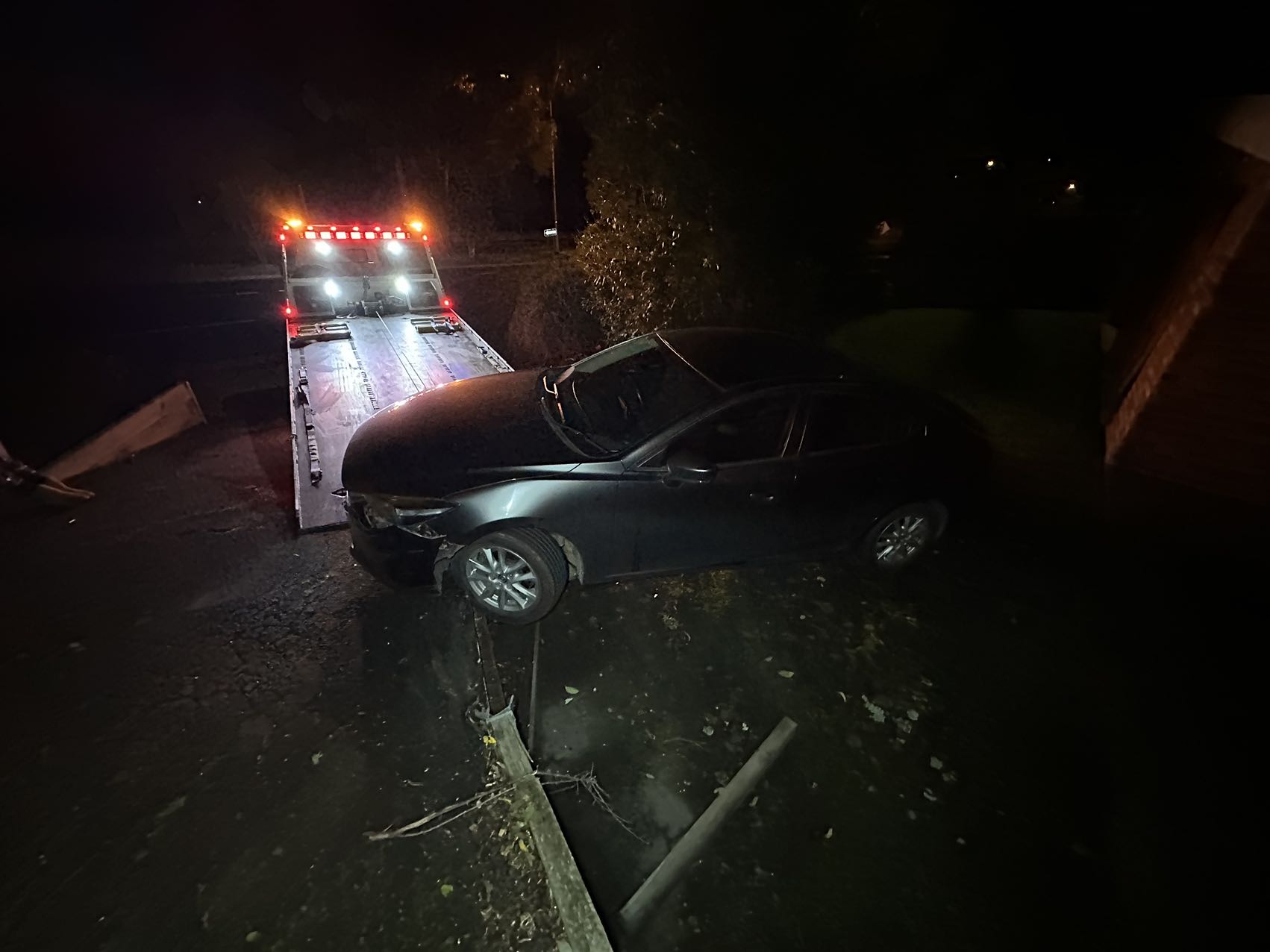
Rain not only causes breakdowns. It also contributes to rear-end crashes, side impacts at intersections, kerb strikes, and multi-vehicle incidents where drivers cannot stop in time. When a crash happens in wet conditions, the vehicle may need to be removed quickly so traffic can move safely again.
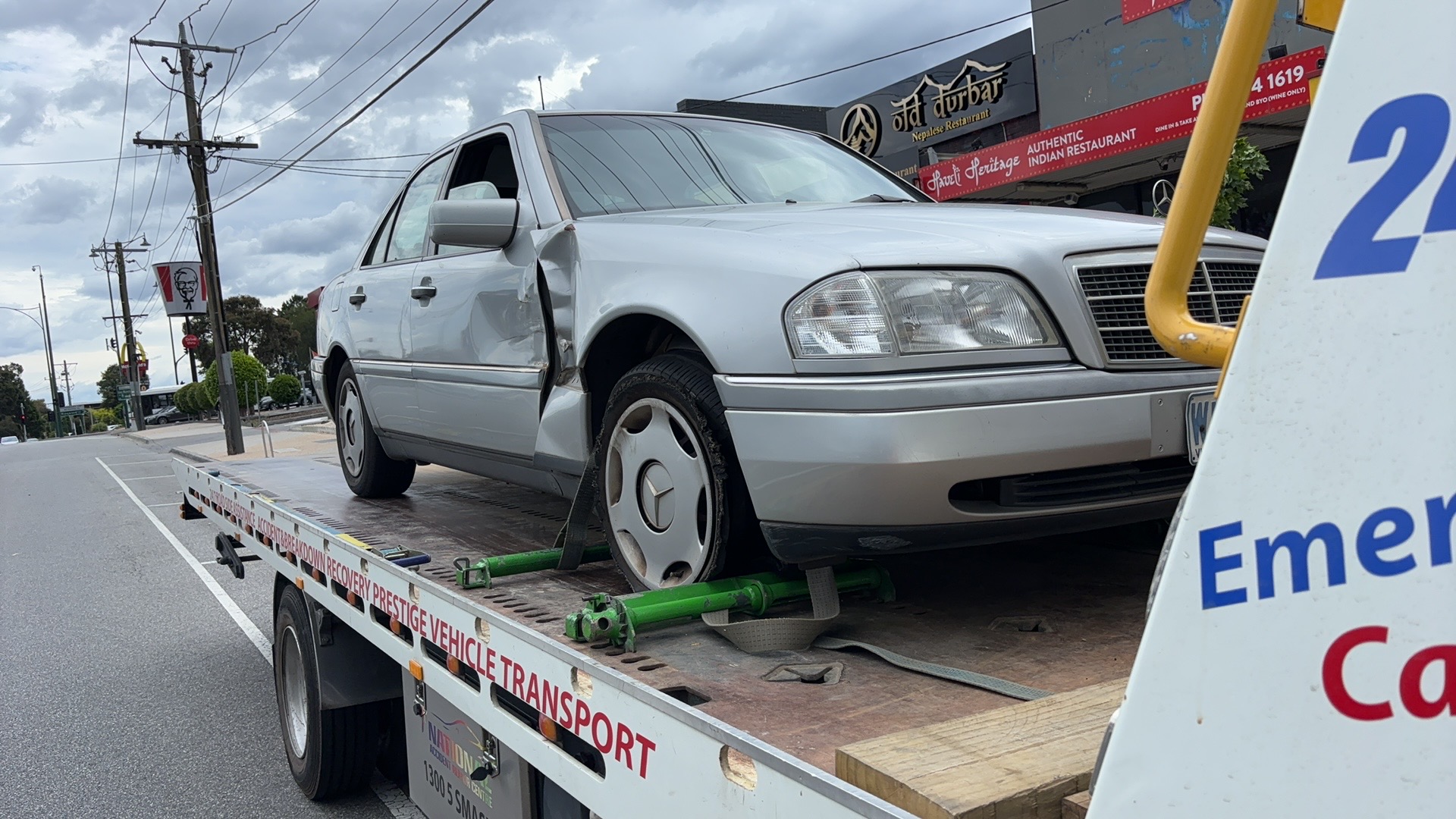
An accident towing service can help after a collision where the car is not safe to drive, has damaged steering, has deployed airbags, has leaking fluid, or is blocking traffic. This is different from a simple breakdown tow because accident scenes may involve police, insurers, damaged panels, broken glass, and traffic management.
What Information to Give the Towing Team
When calling for help, try to provide your exact location, nearest intersection, direction of travel, number of vehicles involved, whether the car is blocking a lane, whether anyone is injured, and whether the vehicle has been exposed to floodwater.
Clear information helps the towing team bring the right equipment and plan the safest recovery approach.
Final Safety Advice for Melbourne Drivers
Never drive through floodwater. Do not assume the depth is safe because another car crossed first. Do not keep restarting a car that has stalled after water exposure. Slow down in the rain, leave more distance, and call for towing support if your vehicle becomes unsafe.
Rain and flood conditions can turn a normal breakdown into a dangerous roadside situation. A professional towing response helps protect your car, but more importantly, it helps protect people.
For urgent help with wet weather breakdowns, crash recovery, or vehicle transport, contact Maningham Towing for Melbourne towing support.